In 1970, computer scientist Winston W. Royce published a paper that unintentionally popularized what later became known as the Waterfall model. Software projects at the time were structured and rigid because computing itself was expensive. Change was costly. Failure was catastrophic.
Fast forward to 2001. A group of 17 software developers met at a ski resort in Utah and signed what became the Agile Manifesto.
Their message was simple but radical: working software matters more than documentation, collaboration matters more than contracts, and responding to change matters more than rigid plans.
Despite all this progress, the reality today remains sobering. A 2026 industry analysis shows that only about 65% of software projects are completed within budget and time, and nearly one-third are canceled or fail to meet objectives altogether.
Software project performance continues to lag:
- The average cost overrun for IT projects in 2026 is about 27%, and 60% of companies fail to stay within their original budget. {Source: WifiTalents}
- In many cases, software projects are canceled before completion, with cancellation rates hovering around 30%. {Source: ZipDo}
- Agile methods outperform traditional approaches in key areas, with 75% of Agile projects completed on time compared to 45% for Waterfall. {Source: ZipDo}
In 2026, organizations face not just technical complexity, but strategic complexity like AI integration, remote teams, compliance requirements, DevOps automation, and ever-faster market expectations.
This guide explores the top 10 software development methodologies in 2026 as strategic tools. You will learn when each works, where it struggles, and how to choose the right approach for your specific business context.
What is a Software Development Methodology?
A software development methodology is a structured framework that defines how a software project is planned, executed, tested, and delivered. It outlines how teams collaborate, manage requirements, control risk, ensure quality, and move through the software development lifecycle (SDLC).
In simple terms, it is the blueprint that determines how software gets built.
Every methodology provides guidance on:
- How requirements are gathered
- How work is divided and prioritized
- How progress is tracked
- How changes are handled
- How quality is validated
- How and when software is released
It is important to understand that a methodology is not just a technical decision. It is a business decision. The framework you choose directly influences development speed, cost control, stakeholder visibility, and the ability to adapt when market conditions change.
The Top 10 Software Development Methodologies in 2026
Software development has evolved through failure and reinvention. The methodologies below reflect decades of learning about what works, what breaks, and what scales.
| Methodology | Best For | Flexibility Level | Risk Level | Speed of Delivery |
| Waterfall | Government, regulated, fixed-scope projects | Low | High if requirements change | Slow |
| Agile | Evolving products, startups, digital platforms | High | Moderate (controlled through iterations) | Fast |
| Scrum | Cross-functional product teams | High | Moderate | Fast (sprint-based) |
| Kanban | Continuous delivery, support & maintenance teams | High | Low to Moderate | Continuous flow |
| DevOps | SaaS, cloud-native, CI/CD-driven products | High | Low (automation reduces risk) | Very Fast |
| Lean | Cost-sensitive startups, efficiency-focused teams | Moderate to High | Moderate | Fast |
| Spiral | Large, high-risk enterprise systems | Moderate | Low (risk-driven approach) | Moderate |
| V-Model | Healthcare, defense, embedded systems | Low | Low (strong validation) | Slow |
| RAD (Rapid Application Development) | MVPs, prototype-heavy projects | High | Moderate | Very Fast |
| Hybrid Models | Large enterprises with mixed requirements | High (customizable) | Depends on structure | Variable |
1. Waterfall Model
As discussed in the first line of the article, the Waterfall model goes back to 1970 when Winston W. Royce described a structured way of building software in sequential phases. Requirements came first. Then design. Then development. Then testing.
Everything moved in one direction. At the time, this made sense. Computing power was expensive. Making changes late in the process was risky and costly.
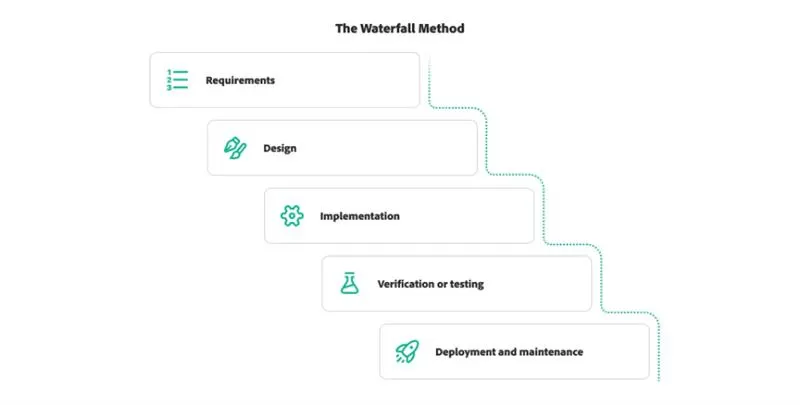
In 2026, Waterfall has not disappeared. It still works in environments where requirements are clearly defined and unlikely to change. Government systems, defense projects, and regulated healthcare software often rely on it because documentation and traceability are mandatory.
But in fast-moving markets, Waterfall struggles. If customer needs shift halfway through development, the cost of adapting can be enormous. This software development methodology works best when stability matters more than speed.
2. Agile Methodology
Agile formally emerged when a group of developers were frustrated with heavy documentation and long release cycles that delivered outdated software by the time it shipped.
Agile changed the mindset. Instead of planning everything upfront, teams would build in small increments, release quickly, gather feedback, and improve continuously.
By 2026, Agile is the default approach for most digital products. It works especially well when requirements evolve and user behavior is unpredictable.
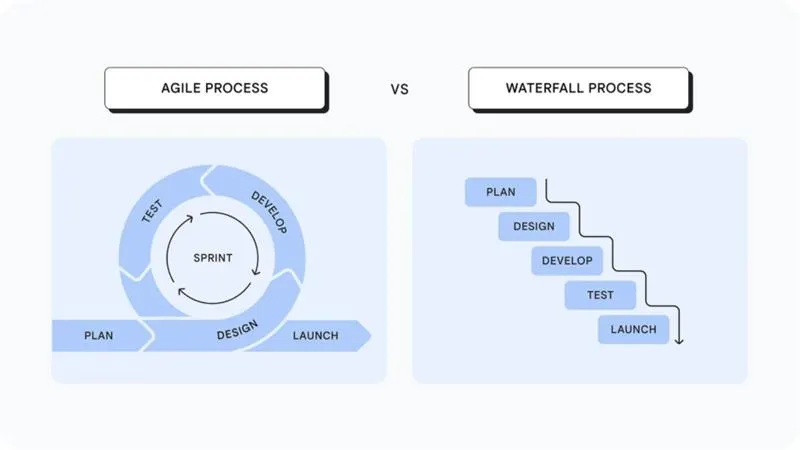
Startups, SaaS platforms, and AI-driven products thrive under Agile because they can adapt quickly. But Agile is not magic. When teams lack discipline or stakeholder alignment, projects drift. Agile succeeds when flexibility is paired with strong ownership and focus.
3. Scrum Framework
Scrum developed in the 1990s as a structured way to practice Agile. Ken Schwaber and Jeff Sutherland introduced defined roles and short development cycles called sprints.
Work is planned for a fixed period, usually two weeks, and the team commits to delivering specific outcomes within that window. The rhythm creates focus and accountability.
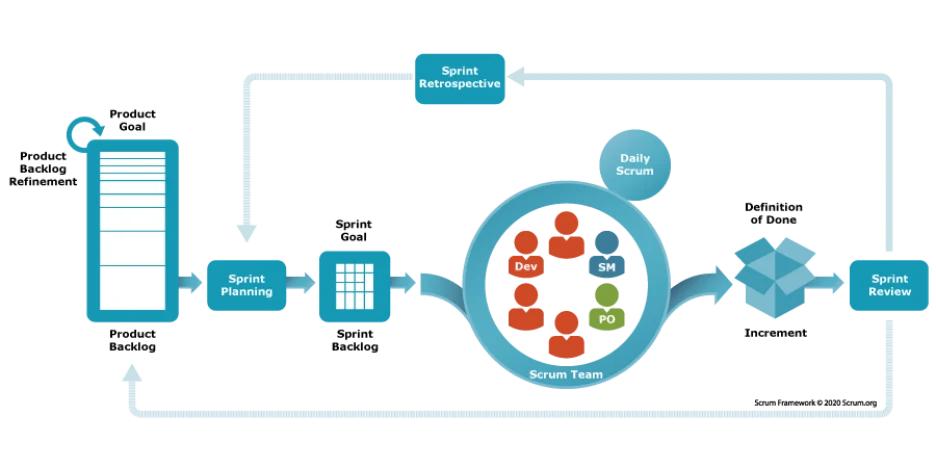
Today, Scrum remains one of the most widely used frameworks in product organizations. It works well when cross-functional teams can operate independently and make decisions quickly.
However, this software development methodology breaks down when leadership frequently interrupts sprints or when priorities change daily. Without trust and autonomy, the structure becomes a ritual instead of a performance driver.
4. Kanban
Kanban did not begin in software. It originated inside Toyota’s manufacturing system as a way to visualize work and reduce bottlenecks.
The concept was later adapted for software teams. This software development methodology focuses on continuous flow. Work items move across a visual board, and teams limit how many tasks are active at one time.
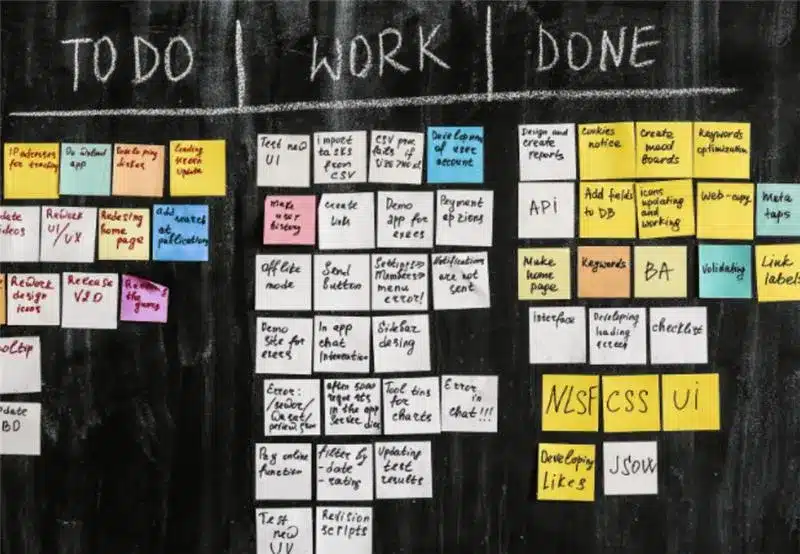
Today Kanban is especially useful for operations teams and maintenance work where tasks arrive unpredictably. It improves visibility and prevents overload.
Unlike Scrum, there is no sprint commitment, which makes it more flexible but less structured. Many organizations now combine Scrum for feature development and Kanban for production support.
5. DevOps Methodology
DevOps emerged in the late 2000s when companies realized that development and operations teams were working in silos. Developers built software. Operations teams deployed and maintained it. The disconnect created delays and friction.
DevOps changed this by encouraging collaboration, shared ownership, and automation across the entire lifecycle.
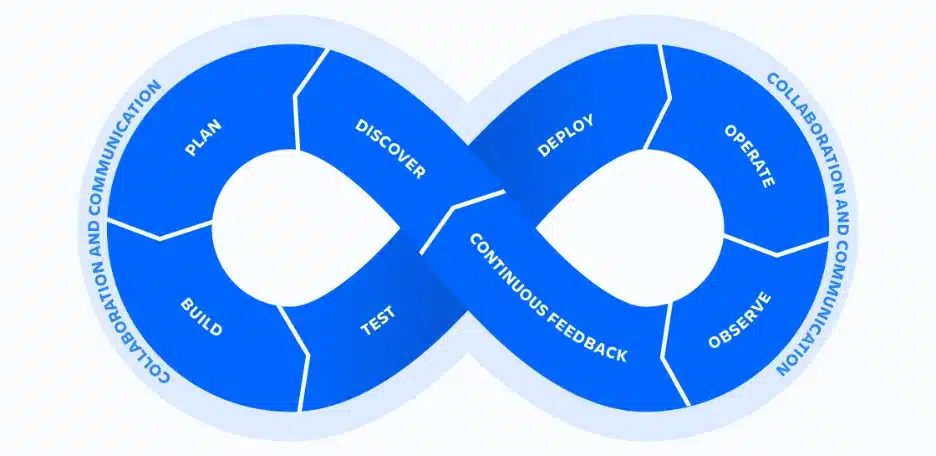
DevOps is essential for any cloud-based or SaaS product. Continuous integration and automated deployments allow teams to release updates multiple times per day. Monitoring tools provide instant feedback.
But DevOps is not just about tools. It requires cultural change. Organizations that adopt automation without changing collaboration habits often see limited results. True DevOps aligns people, process, and technology.
6. Lean Software Development
Lean software development adapts principles from lean manufacturing into the software world. It gained traction in the early 2000s when Mary and Tom Poppendieck articulated how eliminating waste could accelerate delivery.
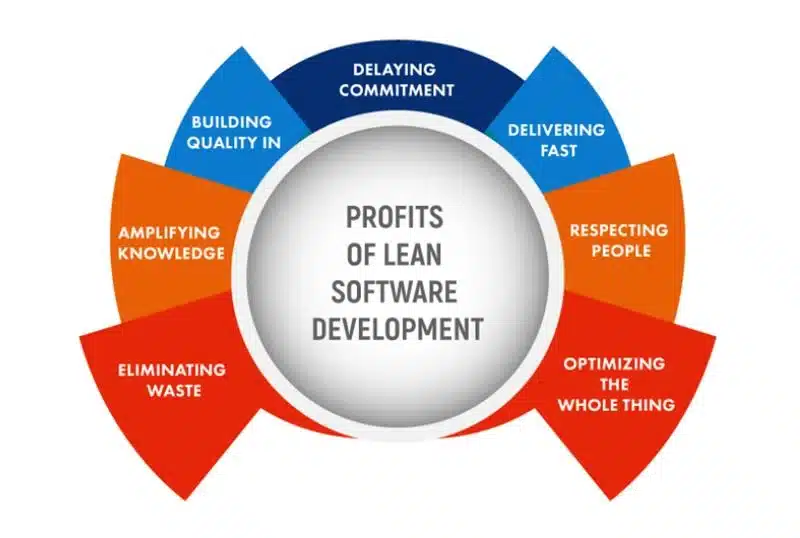
The idea is simple. Remove anything that does not create value for the customer. Today, Lean appeals to startups and growing companies that need speed and efficiency. It encourages smaller batches of work, faster feedback, and minimal bureaucracy.
However, pushing efficiency too far can lead to underinvestment in architecture and documentation. Lean works best when leaders understand that efficiency should support long-term value.
7. Spiral Model
The Spiral model was introduced in 1986 by Barry Boehm as a response to the limitations of Waterfall. Instead of moving linearly, the project progresses through repeated cycles.
Each cycle includes planning, risk analysis, development, and evaluation. The focus is on identifying and reducing risk early.
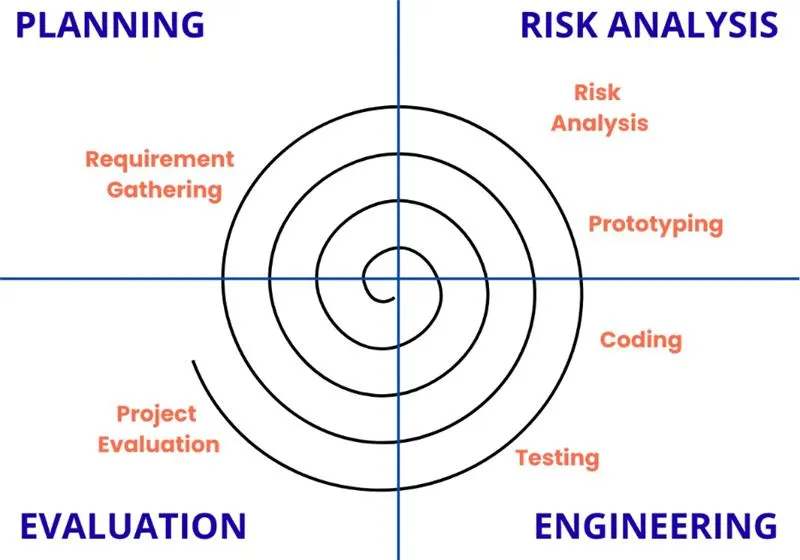
In modern enterprise environments, the Spiral model still has value. It is particularly useful for complex systems where technical uncertainty is high.
Aerospace, defense, and large banking platforms often use it to manage risk before committing significant investment. This software development methodology is more expensive upfront, but it reduces the likelihood of catastrophic failure later.
8. V-Model
The V-Model evolved as an extension of Waterfall with a stronger emphasis on testing. Each development phase corresponds to a testing phase.
Design decisions are validated systematically, forming a V-shaped structure. The goal is to detect defects early and ensure compliance at every step.
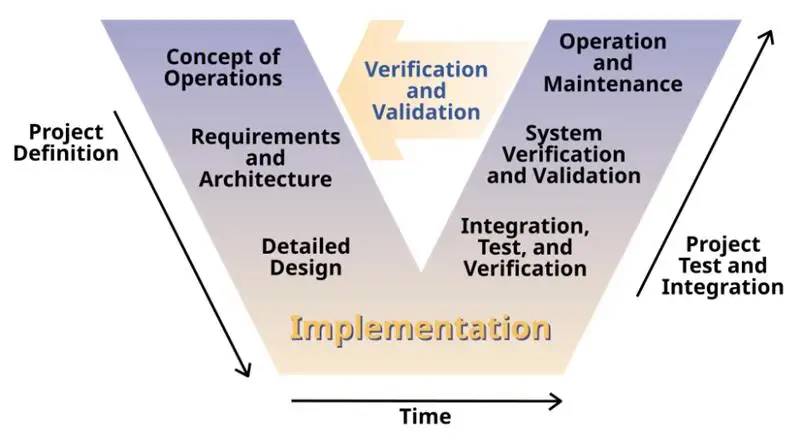
This software development methodology remains important in industries where failure is not an option. Healthcare software, embedded systems, and safety-critical applications rely on strict validation.
The model may feel rigid compared to Agile, but its discipline protects organizations from legal and operational risk. It is designed for reliability rather than rapid iteration.
9. Rapid Application Development (RAD)
Rapid Application Development became popular in the 1990s when businesses demanded faster software delivery. RAD emphasizes quick prototyping and user feedback. Teams build functional versions early and refine them based on real input.
Today, RAD works well for MVPs and internal enterprise tools where speed is critical. It allows organizations to test ideas quickly before committing significant resources.
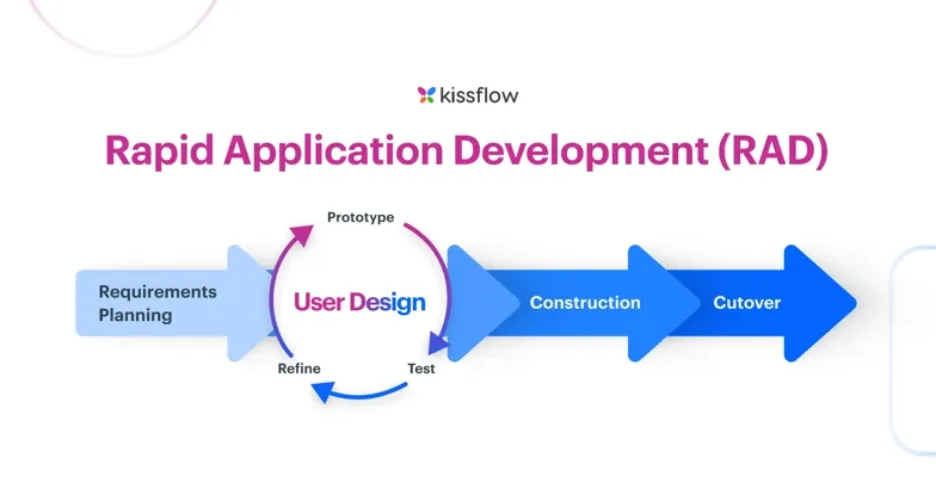
However, scaling a system built purely under RAD can create architectural challenges. Without thoughtful planning, technical debt accumulates. This software development methodology is powerful when speed is necessary, but it must be balanced with long-term thinking.
10. Hybrid Models
In 2026, most enterprises no longer follow a single methodology strictly. Real-world systems are too complex. Regulatory modules may require Waterfall planning. Product teams may operate in Scrum. Deployment pipelines may follow DevOps practices.
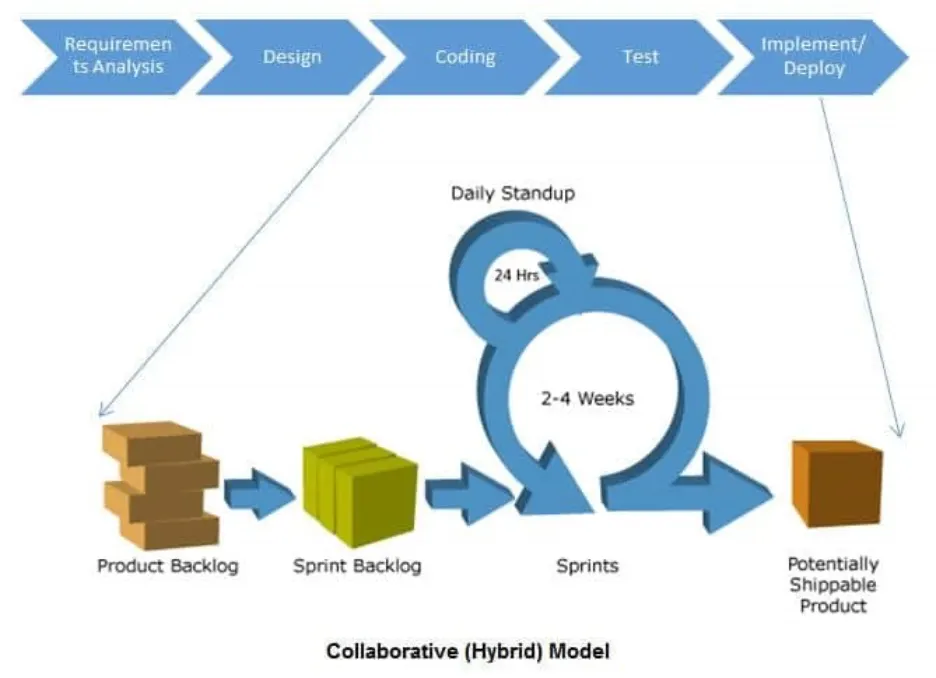
The result is a hybrid structure designed intentionally around business needs. Hybrid models reflect maturity. They acknowledge that no single framework solves every problem. The key is alignment.
When organizations design their methodology around project context rather than ideology, execution improves.
How to Choose the Right Software Development Methodology in 2026
There is no universally “best” software development methodology. The right choice depends on context.
Selecting a methodology is less about preference and more about alignment between business goals and execution style. Here is how serious teams make that decision.
1. Start With Requirement Stability
If your requirements are clearly defined and unlikely to change, structured models like Waterfall or V-Model may work well. This is common in compliance-heavy industries or contractual government work.
If requirements are expected to evolve based on user feedback, market testing, or experimentation, Agile or Scrum becomes more suitable. Flexibility reduces rework and accelerates learning.
The key question is simple: How certain are you about what you are building?
2. Evaluate Risk and Complexity
High-risk projects with significant technical uncertainty benefit from risk-driven approaches like the Spiral model. When failure has serious financial or operational consequences, structured risk assessment upfront is worth the investment.
On the other hand, lower-risk digital products may prioritize speed over extensive analysis. In those cases, Agile combined with DevOps enables faster iteration without excessive upfront overhead.
Ask yourself: What is the cost of getting this wrong?
3. Consider Team Maturity and Structure
A methodology only works if the team can execute it properly.
Scrum requires disciplined sprint planning and cross-functional ownership. DevOps requires collaboration between development and operations. Lean demands decision-making autonomy and accountability.
If your organization lacks experience in a particular framework, implementation risk increases. Sometimes the simplest approach executed well outperforms a sophisticated model applied poorly.
4. Assess Time-to-Market Pressure
If speed is critical, iterative models such as Agile, RAD, or DevOps-supported workflows allow incremental releases and faster validation.
If your timeline allows for structured documentation and phased execution, traditional models may provide more control.
5. Factor in Compliance and Governance
Industries such as healthcare, fintech, aerospace, and defense often require detailed documentation and validation processes. In such cases, V-Model or Waterfall-based planning may be necessary.
However, many organizations now adopt hybrid structures. For example, regulatory planning may follow Waterfall principles, while product development uses Scrum and deployment relies on DevOps automation.
6. Align With Long-Term Scalability
Some software development methodologies accelerate delivery but create technical debt if not managed carefully. RAD and loosely implemented Agile can lead to architectural shortcuts.
If your product is expected to scale significantly, your chosen methodology must support long-term maintainability.
The right framework balances immediate progress with future sustainability.
Conclusion
Software development methodologies have evolved through decades of trial, failure, and refinement.
From the structured discipline of Waterfall to the flexibility of Agile and the automation mindset of DevOps, each model emerged to solve a specific problem of its time. None of them are universally superior. Each one reflects a trade-off between control and adaptability.
Projects rarely fail because developers cannot code. They fail because teams choose an execution model that does not match the reality of what they are building.
The most successful organizations treat methodology as a strategic lever. They evaluate risk, team maturity, compliance needs, and market pressure before deciding how work should flow.
There is no perfect model. There is only the right fit for the context and the right software development partner.
That decision determines whether software becomes a competitive advantage or an expensive lesson.
Frequently Asked Questions
1. What is the most popular software development methodology in 2026?
Agile, in some form, remains the most widely used approach. But most companies are not running “pure Agile.” They combine Agile practices with DevOps automation and structured governance where needed.
2. Is Agile better than Waterfall?
Not universally. Agile works better when requirements change and speed matters. Waterfall works better when scope is fixed and compliance is strict. The wrong choice in the wrong context causes failure.
3. Do startups always use Agile?
Most do, because startups deal with uncertainty. They need fast feedback and iteration. However, even startups benefit from some structure. Pure chaos disguised as Agile usually leads to technical debt.
4. Does DevOps replace Agile?
No. DevOps complements Agile. Agile focuses on how software is built. DevOps focuses on how it is tested, deployed, and maintained. Together, they shorten delivery cycles and improve reliability.