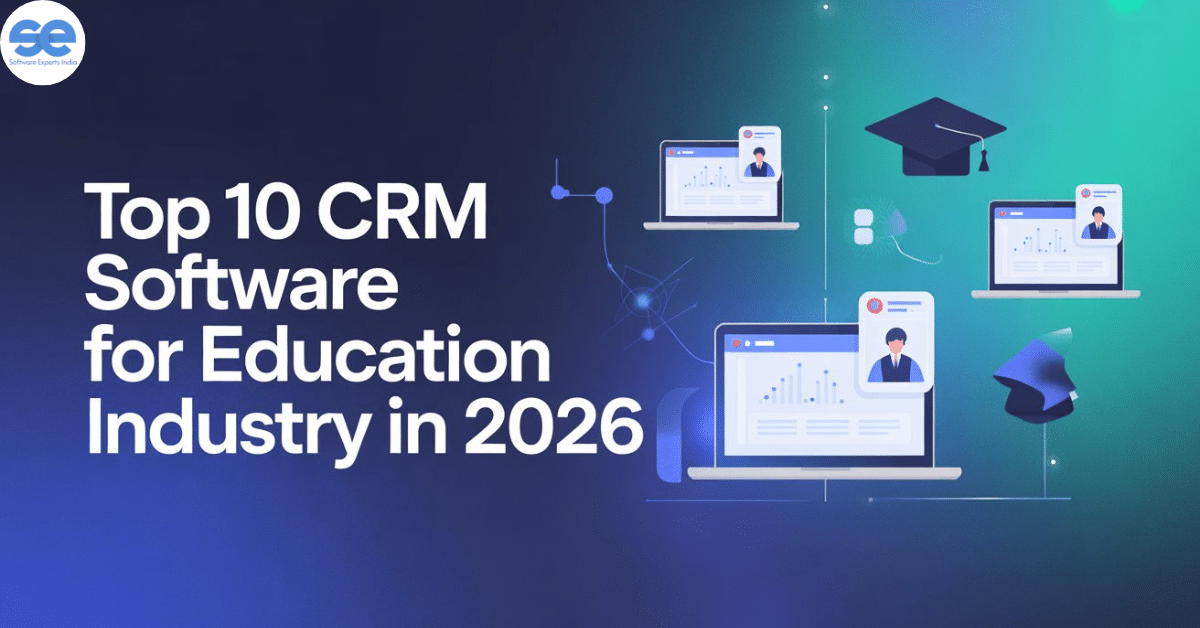
Managing student relationships, tracking admissions, and streamlining communication have never been more critical. The right CRM software for education industry can transform how institutions engage with prospective students, current learners, and alumni. According to Grand View Research, the global CRM market is projected to reach $157.6 billion by 2030, with education being one of the fastest-growing adopters.
Whether you run a university, K-12 school, or online learning platform, this guide covers the top 10 CRM solutions making an impact in 2026.
Top 10 CRM Software for Education- Quick Comparision
| RM Software | Best For | Free Trial | Starting Price |
|---|---|---|---|
| Salesforce Education Cloud | Large universities | Yes | Custom |
| HubSpot CRM | Small-mid institutions | Yes | Free plan available |
| Slate (Technolutions) | Admissions teams | No | Custom |
| Ellucian CRM Advance | Higher education | No | Custom |
| LeadSquared | Student enrollment | Yes | $25/user/mo |
| Zoho CRM | Budget-conscious schools | Yes | $14/user/mo |
| Element451 | Enrollment marketing | Yes | Custom |
| Blackbaud CRM | Nonprofits & fundraising | No | Custom |
| Microsoft Dynamics 365 | Enterprise institutions | Yes | $65/user/mo |
| Creatio | Workflow automation | Yes | $25/user/mo |
Top 10 CRM Software for Education Industry in 2026
1. Salesforce Education Cloud
Overview: Salesforce Education Cloud is purpose-built for higher education institutions. It brings together student data, advising tools, and engagement tracking in one unified platform.
Key Features:
- 360-degree student profiles
- AI-powered insights with Salesforce Einstein
- Automated communication workflows
- Alumni and fundraising management
Best For: Large universities and multi-campus institutions needing enterprise-grade CRM.
Pros: Highly customizable; strong integration ecosystem; excellent reporting tools.
2. HubSpot CRM
Overview: HubSpot CRM is a popular choice for smaller schools and edtech companies due to its free tier and ease of use. It offers solid marketing and sales pipeline tools.
Key Features:
- Contact and deal management
- Email marketing automation
- Live chat and chatbot support
- Drag-and-drop pipeline views
Best For: Small to mid-sized educational institutions and online course providers.
Pros: Free plan available; beginner-friendly; strong content marketing integration.
3. Slate by Technolutions
Overview: Slate is specifically designed for college admissions and enrollment management. It is widely used by hundreds of universities across North America.
Key Features:
- Application and inquiry tracking
- Configurable communication plans
- Event management tools
- Robust reporting and dashboards
Best For: Admissions teams at colleges and universities.
Pros: Deep admissions workflow support; highly regarded in higher education circles.
4. Ellucian CRM Advance
Overview: Ellucian CRM Advance focuses on alumni engagement and fundraising for higher education. It integrates seamlessly with other Ellucian ERP systems.
Key Features:
- Alumni relationship tracking
- Gift and campaign management
- Event and volunteer coordination
- Deep Ellucian Banner/Colleague integration
Best For: Development and alumni affairs offices in universities.
Pros: Strong ERP integration; purpose-built for advancement teams.
5. LeadSquared
Overview: LeadSquared is gaining traction in the education sector for its powerful lead capture and enrollment automation capabilities. It is particularly popular with edtech and coaching institutes.
Key Features:
- Lead capture from multiple channels
- Automated follow-up sequences
- Enrollment and fee management
- Mobile CRM for field teams
Best For: Edtech companies, coaching centers, and enrollment-heavy institutions.
Pros: Affordable pricing; strong mobile support; excellent automation.
6. Zoho CRM
Overview: Zoho CRM is a versatile, budget-friendly option that educational organizations can customize to manage leads, communications, and student journeys effectively.
Key Features:
- Multi-channel communication (email, phone, social)
- Custom modules and fields
- Workflow automation and blueprints
- AI assistant (Zia) for predictions
Best For: Budget-conscious schools and small educational businesses.
Pros: Very affordable; part of the larger Zoho ecosystem; easy to set up.
7. Element451
Overview: Element451 is a modern student engagement platform built specifically for higher education enrollment and marketing teams. It combines CRM with a powerful AI engine.
Key Features:
- AI-driven student engagement
- Personalized communication campaigns
- Admissions funnel tracking
- Website integration and chatbots
Best For: Enrollment marketing teams at colleges and universities.
Pros: Strong AI personalization; modern UX; built for enrollment professionals.
8. Blackbaud CRM
Overview: Blackbaud CRM is tailored for educational nonprofits and independent schools focused on fundraising, donor management, and alumni engagement.
Key Features:
- Fundraising and grant tracking
- Constituent relationship management
- Reporting and analytics
- Online giving tools
Best For: Independent schools, nonprofits, and university advancement offices.
Pros: Deep nonprofit expertise; strong compliance support.
9. Microsoft Dynamics 365
Overview: Microsoft Dynamics 365 offers a robust enterprise CRM that education institutions can configure for admissions, student services, and alumni relations. Its integration with Microsoft 365 is a major advantage.
Key Features:
- Student lifecycle management
- Power BI integration for analytics
- LinkedIn Sales Navigator integration
- AI-powered recommendations
Best For: Large institutions already embedded in the Microsoft ecosystem.
Pros: Seamless Office 365 integration; enterprise scalability; powerful analytics.
10. Creatio
Overview: Creatio is a no-code CRM platform that enables educational institutions to automate complex enrollment and communication workflows without heavy IT involvement. It’s rising in popularity in 2026 for its flexibility.
Key Features:
- No-code workflow automation
- 360-degree contact management
- Marketing campaign tools
- Flexible app builder
Best For: Institutions wanting deep customization without relying heavily on developers. If you need custom integrations, exploring custom software development services alongside Creatio can extend its capabilities.
Pros: No-code flexibility; modern interface; strong automation tools.
Key Features to Look for in Education CRM Software
When evaluating CRM software for the education industry, prioritize these capabilities:
- Student Lifecycle Management: Track students from inquiry through enrollment, graduation, and beyond.
- Multi-Channel Communication: Email, SMS, WhatsApp, and social media integration in one place.
- Automation: Automate repetitive tasks like follow-up emails, reminders, and status updates.
- Reporting and Analytics: Real-time dashboards to monitor enrollment funnels and campaign performance.
- Integration Capabilities: Compatibility with SIS (Student Information Systems), LMS platforms, and payment gateways.
- Mobile Access: Field counselors and admissions reps need CRM access on the go.
- Data Security and Compliance: FERPA compliance is non-negotiable for U.S. institutions.
Benefits of Using CRM in the Education Industry
Adopting CRM software delivers measurable advantages for educational institutions:
- Improved Enrollment Rates: Timely and personalized communication converts more prospective students.
- Better Student Retention: Proactive engagement helps identify at-risk students before they drop out.
- Streamlined Admissions: Automated workflows reduce manual work for admissions teams.
- Stronger Alumni Relations: Stay connected with graduates for fundraising and networking.
- Data-Driven Decisions: Analytics help leadership make informed decisions about programs and outreach.
Understanding which tools best support your goals often depends on how your institution approaches its software decisions. Familiarity with different software development methodologies can also inform how well a CRM vendor will align with your implementation process.
How to Choose the Right CRM for Your Institution
Choosing the best CRM is not just about features — it is about fit. Here is a simple framework:
Define Your Core Use Case
Are you focused on admissions, alumni engagement, student success, or all three? Different CRMs excel in different areas.
Assess Your Budget
Enterprise platforms like Salesforce and Microsoft Dynamics offer powerful features but at a higher cost. Zoho and LeadSquared deliver strong value at lower price points.
Evaluate Integration Needs
Your CRM must work seamlessly with your existing SIS, LMS, and communication tools. Poor integration creates data silos.
Consider Your Team’s Technical Capacity
If your team lacks a dedicated IT department, opt for low-code or no-code solutions. If you have technical resources or plan to hire software developers talent, more customizable platforms open up.
Request a Demo
Always test the product with your real workflows before committing. Most vendors offer trial periods or demo environments.
Conclusion
The education sector in 2026 demands more than spreadsheets and email chains to manage student relationships. Investing in the right CRM software for education industry can directly impact enrollment numbers, student satisfaction, and institutional growth.
Whether you’re a small tutoring center or a large state university, there is a CRM solution on this list that fits your needs and budget. Take time to assess your priorities, run demos, and involve your team in the decision.
Ready to take the next step? Start by shortlisting two or three platforms from this list that match your use case, and request a personalized demo from each vendor. The right CRM is an investment that pays dividends across your entire institution.
Frequently Asked Questions (FAQs)
1. What is CRM software for the education industry?
CRM (Customer Relationship Management) software for education helps institutions manage relationships with students, parents, alumni, and staff. It automates communication, tracks admissions pipelines, and supports student engagement throughout the academic lifecycle.
2. Which is the best CRM for higher education?
Salesforce Education Cloud, Slate by Technolutions, and Element451 are widely considered the best CRM platforms for higher education, depending on whether your focus is on student success, admissions, or enrollment marketing.
3. Is CRM software useful for K-12 schools?
Yes. K-12 schools can use CRM tools to manage parent communication, track student inquiries, handle enrollment, and coordinate events. HubSpot CRM and Zoho CRM are good starting points for smaller K-12 institutions.
4. How much does education CRM software cost?
Pricing varies widely. Free plans are available from HubSpot; paid plans start from around $14/user/month (Zoho) to enterprise custom pricing (Salesforce, Slate, Ellucian). Most vendors offer custom quotes for educational institutions.
5. Can CRM software help improve student retention?
Absolutely. CRMs with student success modules can flag at-risk students based on engagement data, trigger advisor outreach automatically, and help institutions intervene before students consider dropping out.